
ENERGIZING THE EDUCATORS: IMPARTING THE INVISIBLE CURRICULUM
Recently, I had the privilege of addressing nearly 120 faculty members during the Faculty Development Programme at Shoolini University, Solan (Himachal Pradesh).
The session explored an idea that has increasingly become central to my research:
The most powerful curriculum we impart is often the one that remains invisible.

Long before a teacher begins speaking, students perceive something deeper. As educators, we unknowingly transmit three powerful E's:
· Energy – our biofield, presence, and the invisible atmosphere we carry into the classroom.
· Enthusiasm – which naturally flows from the quality of our energy (or the lack of it).
· Empathy – the ability to truly see the world through a student's eyes.
In many ways, the latter two emerge from the first.
Drawing upon research from Harvard, insights from Building Biology, Vedic Vaastu, and documented case studies, we explored how an educator's biofield can become depleted through factors such as geopathic stress, poor sleep, dehydration, and compromised indoor air quality, and how it can be strengthened through grounding, morning sunlight, structured water, and electromagnetic hygiene.
The discussion then connected these ideas with the Nine Precepts of Bioenergetic Architecture—not merely as architectural principles, but as practical daily disciplines that can help educators cultivate greater presence, resilience, and vitality.
The "invisible curriculum" suddenly became visible.
It was reflected in how a teacher enters a classroom, whether they are genuinely present, whether students instinctively feel safe, engaged, and inspired in their presence, and whether educators can remain centred amidst the often unpredictable and fluctuating energy of a classroom.

One of the most rewarding moments came after the session.
Several senior faculty members and Heads of Departments stayed back to discuss their own research interests. PhD scholars working in Yoga, Neuroscience, and Environmental Health shared that they are investigating closely related themes. Even more encouraging was learning that the Dean of Studies is exploring the possibility of introducing a semester-long course around these ideas.
Conversations like these reaffirm my belief that while we invest significant effort in improving what we teach, perhaps the next frontier in education lies in understanding who we are while we teach.
Because every educator teaches two curricula—one that is written, and another that is silently transmitted.

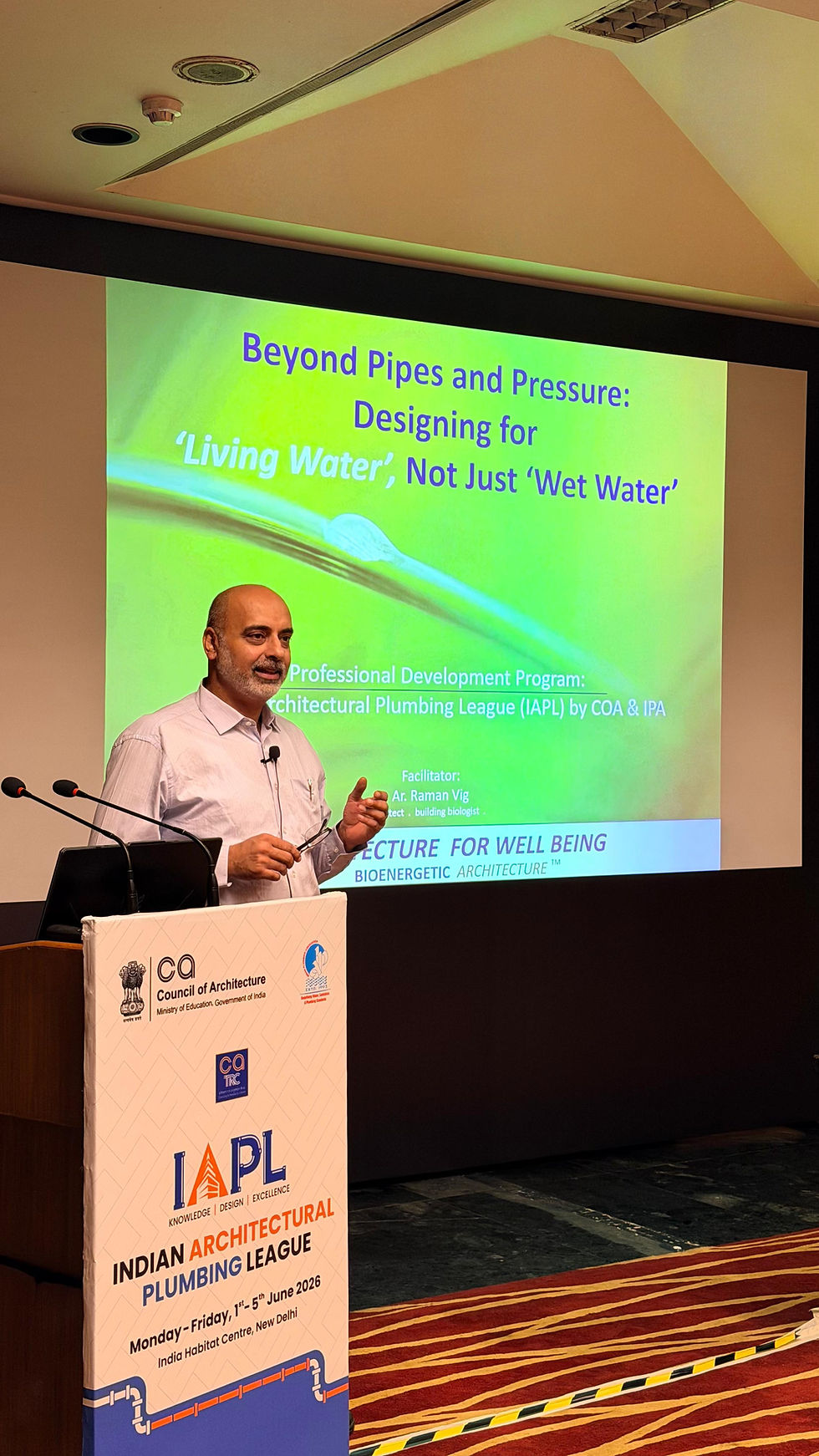

Such a passionate and confident Professor in addressing the audience.